A radical new protocol designed to stop politicians using
opponents' mental health problems to win political advantage during
the election campaign has won applause from key organisations in
the mental health sector.
The protocol, the first of its kind in the UK, will be launched
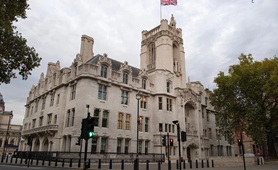
today (22 March 2010) at Westminster, after months of lobbying by a
coalition made up of mental health charities Rethink, Mind, and
Stand to Reason, and the Royal College of Psychiatrists.
Party leaders Gordon Brown, David Cameron, and Nick Clegg have
signed up to this best practice
"Compact” – an election first which effectively bans
politicians from making slurs about opponents' mental health while
campaigning.
The Compact should make inroads towards stamping out mental
health discrimination among politicians and encourage the next
generation of MPs to be open about their mental health without fear
of reprisal from opponents and the media.
Under the terms of the Compact, politicians vow to:
- not stigmatise, slur or discriminate against anyone with a
mental health problem, even when out canvassing
- challenge negative attitudes towards mental health, including
"canteen culture harassment" where innocent banter can cause
offence
- not speculate about the mental health of any prospective
politician
- represent the interests of all constituents regardless of their
mental health.
Dinesh Bhugra, President of the Royal College of Psychiatrists,
said: “This election may be a battle – but it should be a battle of
ideas, not slurs. Candidates must be able to be open about mental
health without it being used against them. Discrimination against
people with mental health problems should have no place in society,
and certainly not in politics. This Compact is a symbolic step from
the political parties, which must be applauded. I hope the
Government elected in May continues this by making the fight
against discrimination in society a core priority.”
Paul Jenkins, chief executive of mental health charity Rethink,
said: "This pact should help politicians to feel more comfortable
about coming out of the mental health closet.Politicians keep quiet
about mental health problems out of fear of public reprisal.
However, Rethink research has found that when politicians are open
about their own mental health, the thousands of individuals
affected by mental illness are more likely to vote. Tackling mental
health stigma face on will help to remove discrimination from the
political arena while at the same time setting a bold example to
the public. We look forward to continued momentum on mental health
issues once the election is over."
Paul Farmer, chief executive of mental health charity Mind,
said: "Playground insults about mental health problems have no
place in an election campaign and we are pleased that the party
leaders have taken this stand. Using someone's mental health
diagnosis as a way to undermine them or mock them is entirely
inappropriate but sadly this is a reality faced by many people who
live with mental distress. We are pleased that politicians are
leading by example on this issue and hope that post election the
new Government will prioritise tackling mental health
discrimination by funding evidence-based anti-stigma campaigns like
Time to Change."
Jonathan Naess, director of Stand to Reason, said: “As a lawyer
and corporate financier who has thrived in work throughout my
career, these issues drove me to set up Stand to Reason, a
Stonewall for mental health, an organisation run by and for
talented people with mental health problems, including MPs. It is
unconscionable that in a representative democracy, 1/4 people
should have to hide their life experiences which may enable them to
make better decisions, particularly in relation to developing
well-funded services that meet the needs of mental health service
users. Stand to Reason contributed to the MPs’ questionnaire and
Election Compact to enable more MPs to come "out" and to encourage
more PPCs to come forward who might otherwise have turned their
backs on Parliament.”
For further information, please
contact:
Liz Leicester
or Deborah Hart in the Communications
Department.
Telephone: 020 7235 2351 Extensions. 6298 or 6127
Note to editors:
The Compact was drawn up following a recommendation in the 2008 report Mental health in Parliament, published by the All party Parliamentary Group on Mental Health.